Born in 1967 in the cosmopolitan city of Montreal, Éric Rico Michel is a photographer, graphic designer, and musician. Since the 1990s, he has concurrently worked in design studios, as a songwriter and guitar player with local groups, while pursuing creative projects in interactive arts and in photography. These seemingly separate paths eventually rub off on each other, trading influences, broadening the spectrum to form an experience that draws from both the rational and the creative side of the mind.
Rico has created a vector font for graphic arts magazine Rectangle (1987), published an album of original music with group Les Michels (1995), produced interactive 360° tours for Google Maps (2014), directed short film Midsummer Reverie (2017), and has participated in collective and solo art shows as a digital artist and as a photographer (2017–).
There is no objective truth in photography. The image is never more than a fragment of reality, a truncated, momentary, and incomplete point of view. The image is subjective, and its truth is always multiple, like that of the observer, or unfathomable, like that of the artist.
If there is such a thing as a “photographic truth”, it is to be found in its fundamental elements: light, composition, and optical device.
I have therefore attempted, inspired by the simplified form of the haiku and the mechanical honesty of Man Ray’s rayographs, to imagine an aesthetic that would stem solely from the photographic form itself. Read
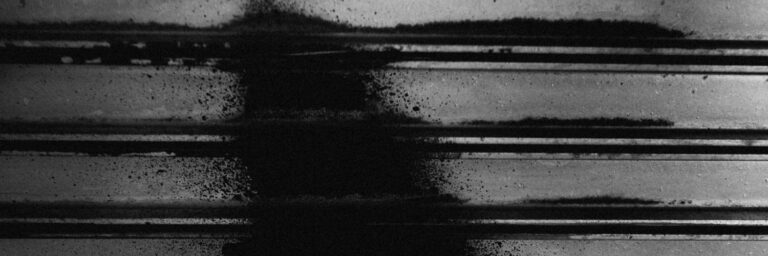
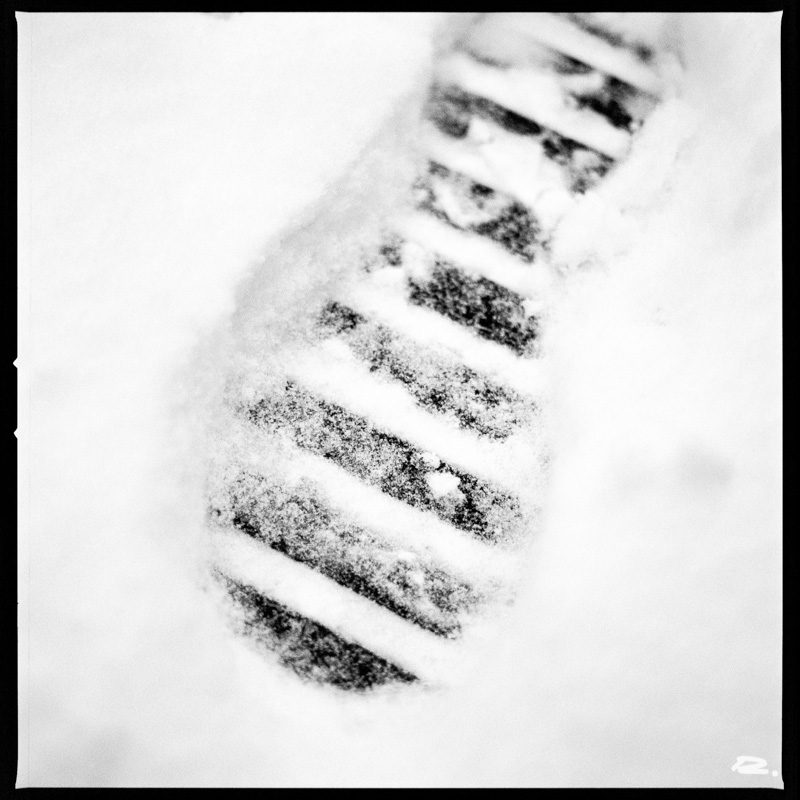
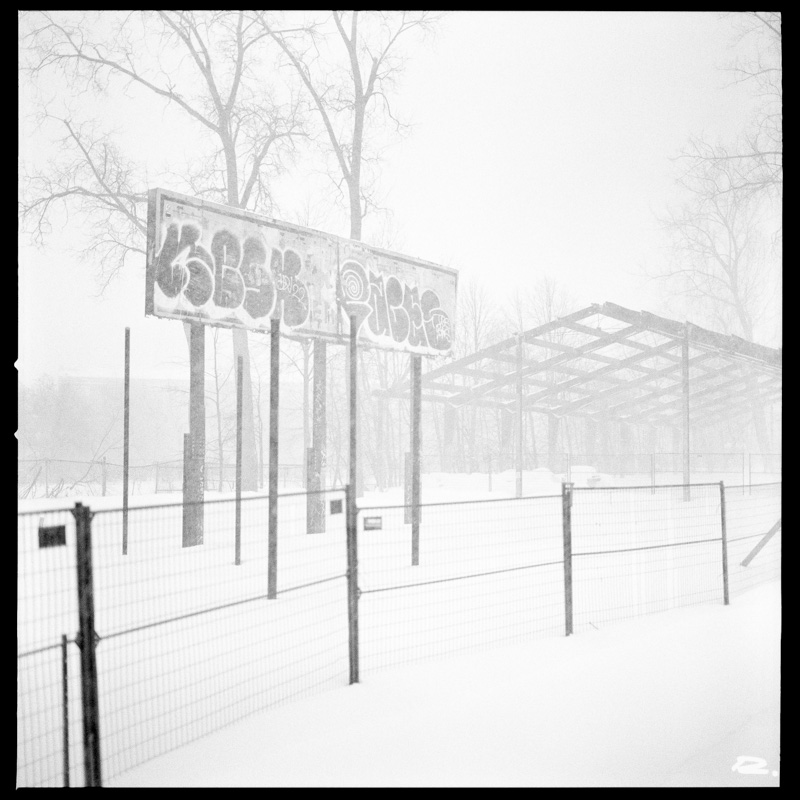
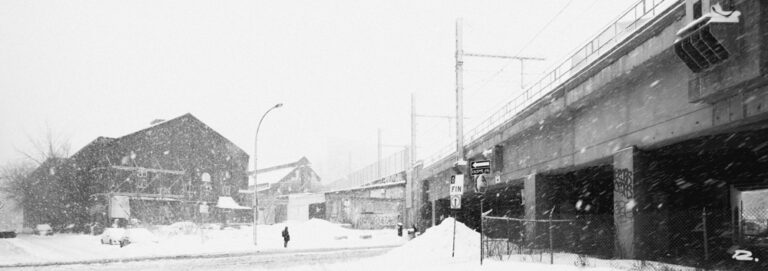
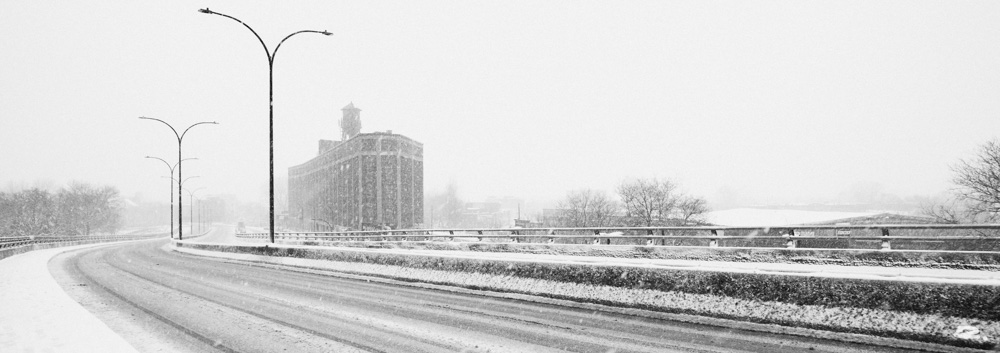
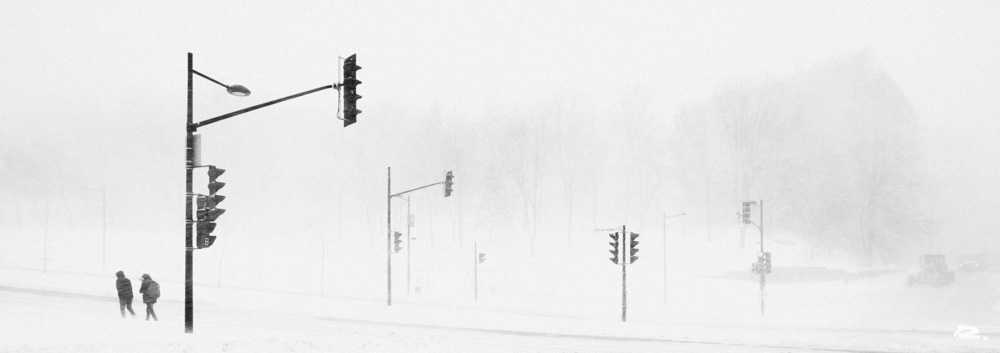
Snowstorn in Griffintown – Panoramic view of a snowstorm in Griffintown, a former industrial neighborhood in Montreal, Quebec. This black and white panoramic photograph was taken by Rico Michel in February of 2023.
“Déjà vu” is a brief experience during which time seems to have been put into a loop.
The moment takes place before our eyes, in present time, but it seems in every way identical to a memory, to an event that we have already experienced but whose origin we are nevertheless unable to clearly identify.
Science suggests that this phenomenon is due to a simple switching error in the cerebral cortex¹. But fortunately, the world is not limited to that of scientific knowledge; thus, I like to imagine that there exists a dimension parallel to ours, a world where the entirety of time and space can be simultaneously accessible in a non-linear way. Déjà vu would then only be a slippage between these two dimensions, a “glitch” of space-time which would temporarily give us access to this other chronology. Read
Of course, the photographic image cannot, as painting does, aspire to pure abstraction. This is due to its very definition: it is a mechanism that allows the fixing of the image of a real object¹. An optical device, such as a lens or a pinhole, captures ambient light and projects it onto a photosensitive surface. This surface — whether it is a film negative or a digital sensor — reacts to varying degrees depending on the intensity of the received light; in this way, it can record the image momentarily projected by the lens.
Abstract painters did not seek to deny reality, but rather to advance painting by freeing it from the formal constraints of realism. They developed a vocabulary proper to the medium by reducing it to its essential elements: matter, form, and color. Painting no longer owed anything to the rest of the world: it had value in and of itself. This way of thinking underlies all modern art of the twentieth century. Read
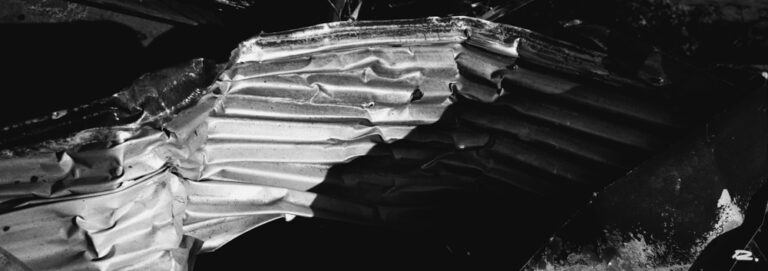
Iron angel — Wide view of a crumpled piece of corrugated steel resembling a wing, in Montreal, Quebec (2023).
Iron angel – Wide view of a crumpled piece of corrugated steel resembling a wing, in Montreal, Quebec. This black and white panoramic photograph was taken by Rico Michel in March of 2023.
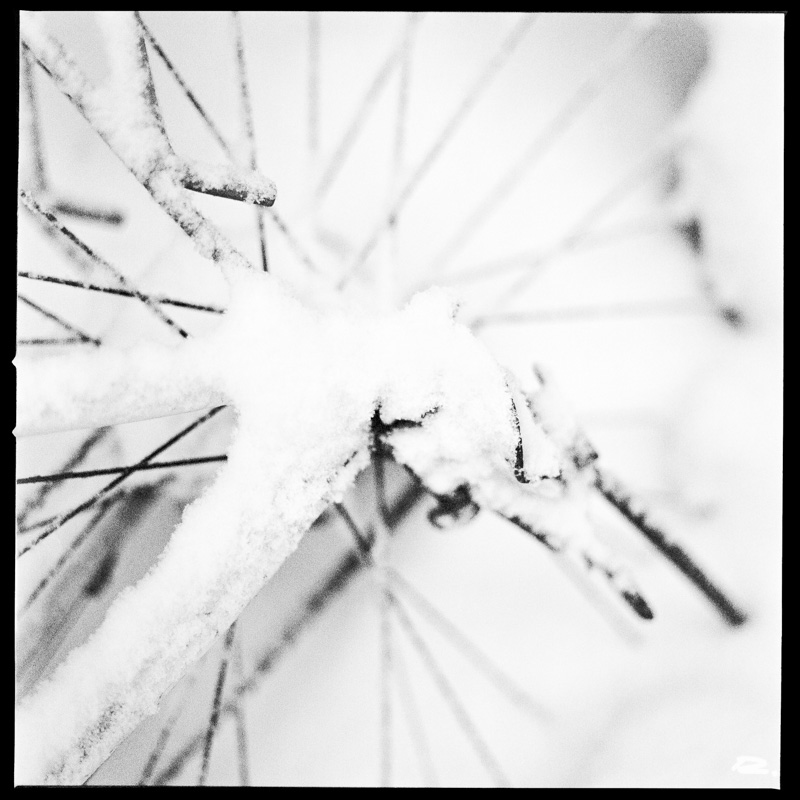
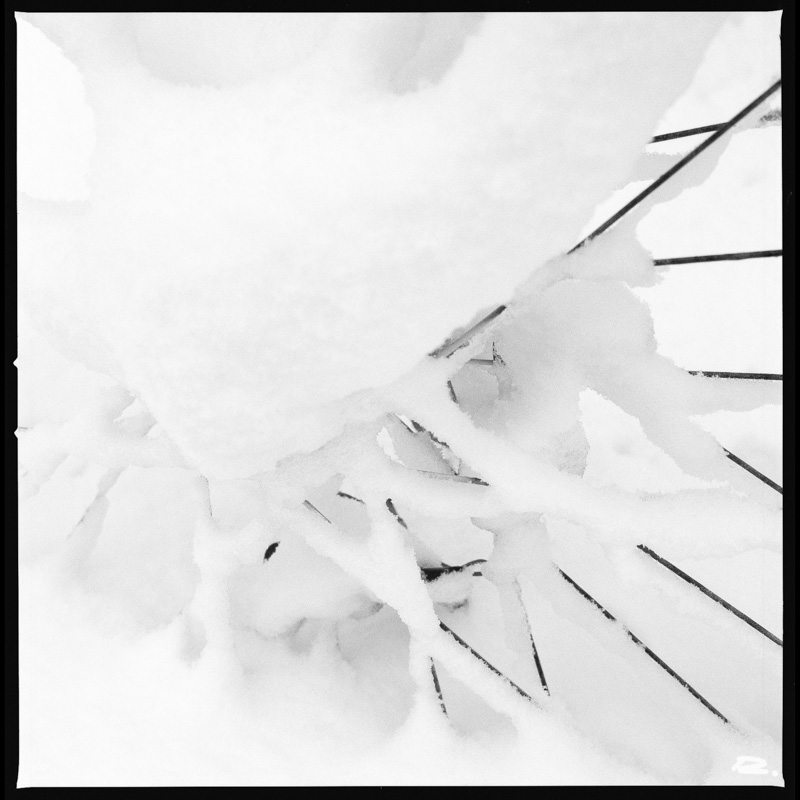
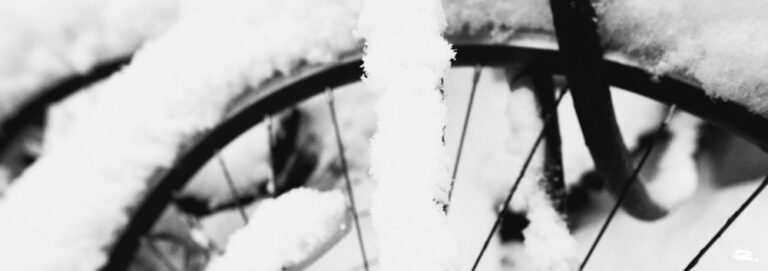
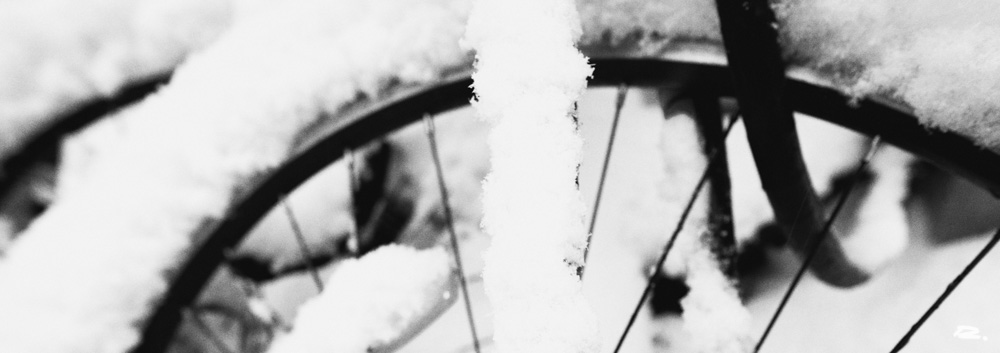
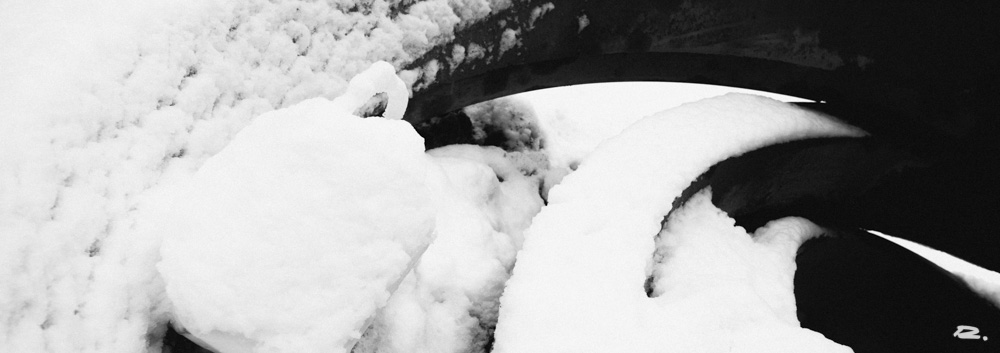
Hermione — Close-up view of a bicycle wheel covered in fresh snow, in Chinatown, Montreal, Quebec (2023).
Hermione – Close-up view of a bicycle wheel covered in fresh snow, in Chinatown, Montreal, Quebec. This black and white panoramic photograph was taken by Rico Michel in February of 2023.
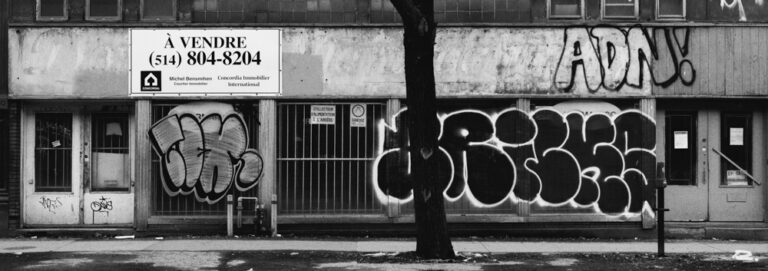
Deserted city – Wide view of an abandoned building on boulevard Saint-Laurent, in Montreal, Quebec. This black and white panoramic photograph was taken by Rico Michel in March of 2022.